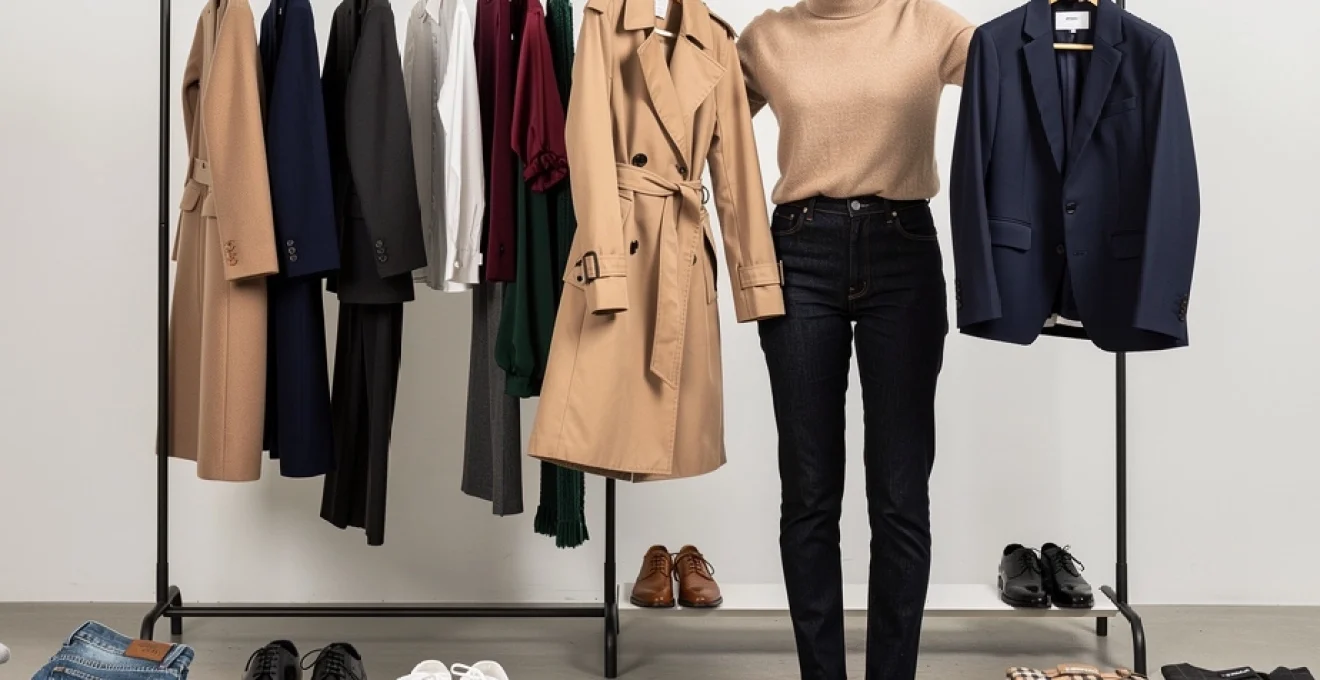
Building a timeless wardrobe transcends fleeting fashion trends and seasonal impulses, representing a strategic investment in personal style that delivers enduring value. The art of curating versatile essentials lies in understanding the intersection of craftsmanship, functionality, and aesthetic longevity. Rather than accumulating numerous pieces that quickly lose relevance, discerning individuals focus on acquiring fewer, superior garments that seamlessly adapt to multiple contexts whilst maintaining their structural integrity and visual appeal across decades.
This approach requires sophisticated understanding of fabric technology, construction methods, and design principles that have withstood the test of time. Quality craftsmanship becomes the foundation upon which a wardrobe’s versatility is built, ensuring each piece serves multiple purposes whilst retaining its form and function. The financial wisdom of this strategy becomes apparent when you consider that investment-grade pieces often cost less per wear than their disposable counterparts, creating both aesthetic and economic value.
Investment-grade foundation pieces for Long-Term wardrobe ROI
The cornerstone of any sophisticated wardrobe lies in carefully selected foundation pieces that demonstrate exceptional construction quality and enduring design principles. These investment-grade garments form the architectural framework upon which countless outfit combinations can be built, justifying their premium price points through superior materials, meticulous craftsmanship, and timeless aesthetic appeal.
Cashmere knitwear: brunello cucinelli and loro piana quality standards
Premium cashmere knitwear represents the pinnacle of luxury basics, with brands like Brunello Cucinelli and Loro Piana establishing industry benchmarks for yarn quality and construction techniques. The finest cashmere originates from specific regions of Mongolia and Tibet, where harsh climatic conditions produce fibres with exceptional softness and insulation properties. When evaluating cashmere quality, you should examine the ply count, gauge density, and finishing techniques that distinguish superior pieces from mass-market alternatives.
Brunello Cucinelli’s approach emphasises hand-finished seams and natural dyeing processes that preserve the fibre’s inherent properties whilst creating subtle colour variations that enhance visual interest. Their garments typically feature reinforced stress points and carefully graduated tensions that prevent stretching and maintain shape integrity over extended wear periods. This attention to construction detail ensures that a quality cashmere pullover or cardigan remains a wardrobe staple for decades rather than seasons.
Premium denim construction: raw selvedge vs japanese mills analysis
Understanding denim construction methodologies reveals significant quality differences that impact both durability and aesthetic development over time. Raw selvedge denim, particularly from renowned Japanese mills like Kuroki and White Oak, represents the highest standard of denim craftsmanship, utilising traditional shuttle looms that create tightly woven fabrics with distinctive self-finished edges.
The aging process of premium denim creates unique wear patterns that reflect individual movement habits and body characteristics, resulting in personalised garments that become increasingly distinctive with use. Japanese mills employ indigo dyeing techniques that allow for gradual fading whilst maintaining structural integrity, contrasting sharply with mass-produced alternatives that deteriorate rather than evolve. When selecting investment denim, prioritise pieces with reinforced pocket construction, quality hardware, and weight specifications between 13-15 ounces for optimal durability.
Tailored blazer architecture: canvassed vs fused construction methods
The construction methodology of tailored blazers fundamentally determines their longevity, shape retention, and overall wearing experience. Full canvas construction employs layers of horsehair canvas that are hand-padded to the jacket’s shell, creating a floating chest piece that moulds to your body over time whilst maintaining structural integrity. This traditional approach requires significantly more labour and expertise but produces garments that improve with wear and maintain their form through decades of use.
Fused construction, whilst more economical, relies on adhesive interfaces that can separate from the shell fabric under heat and moisture, resulting in bubbling and permanent shape distortion. Half-canvassed blazers offer a compromise, featuring canvas construction in the chest area whilst utilising fused methods for the lower sections. For wardrobe investment purposes, full canvas construction justifies its premium cost through superior drape, breathability, and the ability to accommodate alterations throughout your lifetime.
Classic trench coat engineering: burberry heritage design elements
The engineering behind a classic trench coat explains why certain designs remain relevant for over a century. Burberry’s heritage trench, originally developed for British officers, exemplifies how functional design can evolve into a timeless wardrobe essential. Its gabardine fabric, invented by Thomas Burberry, is tightly woven from cotton yarns to create a water-resistant yet breathable shell that performs across multiple climates and seasons.
Construction details such as storm flaps, gun patches, and hook-and-eye neck closures were initially developed for battlefield practicality but now serve as signatures of authentic trench design. The iconic epaulettes, D-rings, and adjustable cuff straps are not mere decoration; they allow for fine-tuning fit and silhouette, making the trench adaptable to different layering scenarios. When you evaluate a trench as an investment piece, pay attention to the density of the gabardine, precision of the topstitching, and robustness of hardware, all of which influence long-term performance.
Fit and proportion are equally crucial to the trench coat’s versatility in a timeless wardrobe. A mid-thigh to knee-length cut in a tailored yet accommodating silhouette allows you to wear the trench over both suiting and casual knitwear without bulk. Neutral tones such as honey, stone, and black integrate seamlessly into an existing capsule wardrobe, while a well-balanced collar and lapel width ensure the coat feels current decade after decade. By prioritising these heritage design elements, you secure a piece that bridges formal, business, and off-duty style with ease.
Investment footwear portfolio: goodyear welted vs blake stitched construction
Footwear often determines whether an outfit reads polished or unfinished, which is why building an investment footwear portfolio is essential for long-term wardrobe ROI. Two primary construction methods dominate high-quality dress and smart-casual shoes: Goodyear welted and Blake stitched. Understanding the differences between them helps you choose pairs that align with your lifestyle, climate, and maintenance preferences.
Goodyear welted shoes feature a leather welt stitched to both the upper and the insole, with the outsole attached to this welt rather than directly to the upper. This method creates a robust barrier against moisture ingress and allows resoling multiple times, often extending a shoe’s life to a decade or more with proper care. Blake stitched construction, by contrast, uses a single stitch that runs through the insole, upper, and outsole, creating a sleeker profile with increased flexibility but slightly less water resistance and resoling options.
For a truly timeless wardrobe, you may wish to treat your footwear like a diversified investment portfolio. Goodyear welted Oxfords or Derbies in black and dark brown serve as “blue-chip” assets, suitable for formal and business settings and delivering strong cost-per-wear value. Blake stitched loafers, Chelsea boots, or minimalist sneakers can play the role of agile, high-rotation pieces, offering comfort and ease of travel. By balancing both constructions, you gain footwear versatility across seasons and dress codes without sacrificing longevity.
Colour theory application for maximum garment versatility
Colour theory is a powerful yet often overlooked tool in building a timeless wardrobe with versatile essentials. When you understand how hues interact, you can create more outfits from fewer garments, reduce visual clutter, and maintain stylistic coherence across seasons. Instead of chasing every trending shade, we focus on a deliberate palette that harmonises with your skin tone and lifestyle, then accent it with strategic colour injections.
A thoughtful colour strategy turns your closet into a modular system, where each piece has multiple potential pairings rather than a single, isolated use. This is where timeless fashion and capsule wardrobe planning intersect most clearly. By refining your palette, you not only simplify daily outfit decisions but also increase the cost-efficiency of each garment, as more combinations mean higher utilisation. The goal is not rigidity but controlled variety that still feels expressive and modern.
Neutral base palette development: camel, navy, and charcoal coordination
At the heart of any timeless wardrobe lies a neutral base palette that acts as visual infrastructure. Camel, navy, and charcoal are especially powerful neutrals because they pair well with one another, flatter a wide range of skin tones, and transition effortlessly from office to weekend. Camel offers warmth and sophistication, navy provides depth without the severity of black, and charcoal delivers a grounded, formal-adjacent presence ideal for tailoring.
Consider how these neutrals function in practice: a camel coat over a navy suit, charcoal trousers with a camel knit, or a navy blazer paired with charcoal denim each create refined, low-contrast outfits. Because these shades sit close in saturation and visual weight, they layer without clashing, much like a well-designed interior where walls, floors, and furnishings share a cohesive palette. When you build your core pieces—coats, trousers, blazers, knitwear—in camel, navy, and charcoal, you ensure near-frictionless coordination.
This neutral foundation also provides a stable backdrop for accent colours and textures. A burgundy scarf over a navy coat or forest green knit under a camel trench becomes the focal point without overwhelming the look. If you have ever felt that your closet is “full but with nothing to wear,” it may be because your neutrals are inconsistent. Aligning them around a tight triad such as camel, navy, and charcoal is a practical first step toward wardrobe harmony.
Undertone analysis for skin compatibility and seasonal adaptability
While neutral colours are highly versatile, not all neutrals flatter every complexion equally. Undertone analysis—evaluating whether your skin reads cooler, warmer, or neutral—helps you select shades that enhance rather than compete with your natural colouring. Cool undertones tend to pair best with blue-based neutrals like navy, charcoal, and cool greys, while warm undertones often harmonise with camel, beige, and warm taupes.
Think of undertones as the “lighting conditions” under which your wardrobe operates. Just as a painting looks different under warm or cool light, your face interacts differently with certain hues. When your clothes share a similar undertone with your skin, the effect is cohesive and refined; when they clash, garments can appear to “wear you” rather than the other way around. This is particularly important for pieces near your face, such as coats, knitwear, and shirts.
Seasonal adaptability also emerges from smart undertone choices. Cool navy can transition from winter suiting to summer shirting, while warm camel moves seamlessly from autumn outerwear to spring layering. By testing a few key pieces—say, a navy blazer, a camel knit, and a cool grey shirt—you can quickly identify which undertones make you look rested and polished. Once you know your best neutrals, you can apply this knowledge across your capsule wardrobe, reducing returns and unworn items.
Accent colour integration: burgundy and forest green strategic deployment
After establishing a neutral base, accent colours provide personality and seasonal nuance without undermining wardrobe cohesion. Burgundy and forest green are particularly effective for timeless wardrobes because they carry a sense of depth and elegance while remaining easy to combine with camel, navy, and charcoal. Where high-chroma trend colours can date a look quickly, these richer accents age gracefully and suit both casual and formal contexts.
Strategic deployment of these hues means limiting them to high-impact, lower-frequency items rather than foundational garments. For example, a burgundy cashmere scarf, forest green knit, or pair of deep green trousers can dramatically expand your outfit permutations. Picture a forest green sweater under a navy blazer with charcoal trousers, or a burgundy turtleneck beneath a camel coat—each combination remains understated yet distinctive. Because these colours echo tones found in nature, they tend to feel familiar and reassuring rather than jarring.
When integrating accents, ask yourself: will this colour work with at least three existing pieces in my wardrobe? This simple rule helps prevent isolated, hard-to-style purchases. Over time, you create a controlled ecosystem where burgundy and forest green recur in different textures—wool, leather, silk—adding visual depth while maintaining a coherent capsule wardrobe colour story.
Monochromatic styling techniques for effortless sophistication
Monochromatic dressing—building an outfit from varying shades of a single colour—is one of the most efficient strategies for looking polished with minimal effort. It leverages colour theory by removing contrast management from the equation, allowing texture, silhouette, and proportion to take centre stage. A head-to-toe navy, grey, or camel look creates a long, uninterrupted line that can visually elongate the body and read as instantly sophisticated.
To avoid flatness in monochrome outfits, we rely on contrast in texture and value rather than hue. Imagine a charcoal wool blazer over a light grey cashmere knit with mid-grey flannel trousers, or a navy silk blouse paired with dark denim and a matte navy trench. Here, the interest comes from sheen, weave, and fabric weight, much like how a black-and-white photograph uses light and shadow to maintain depth. This approach is particularly powerful in a minimalist capsule wardrobe where you want maximum impact from limited pieces.
Monochromatic dressing also supports rapid packing and travel planning. By choosing a single base colour for a trip—say, navy—you can build a micro capsule of interchangeable pieces that all work together. This minimises decision fatigue and reduces the risk of mismatched outfits while still feeling intentional and elevated. With practice, monochrome outfits become a reliable tool in your timeless wardrobe playbook.
Fabric technology and seasonal adaptability strategies
Fabric technology has advanced significantly in recent decades, offering new ways to make a timeless wardrobe function year-round without excessive volume. The key is to understand how natural fibres, technical blends, and fabric weights interact with temperature and humidity. Rather than owning separate wardrobes for each season, you can create a layered system where core pieces adapt to changing conditions through intelligent fabric choices.
Merino wool, for instance, offers thermoregulation, moisture-wicking, and odour resistance, making it ideal for base layers and knitwear in both cool and transitional seasons. Lightweight merino can replace multiple cotton sweaters, while heavier gauges stand in for bulkier outerwear when layered under a trench or tailored coat. Similarly, cotton-linen blends provide breathability and structure for spring and summer, avoiding the excessive wrinkling of pure linen while remaining cooler than pure cotton.
Modern technical fabrics also play a supporting role in a timeless wardrobe when chosen judiciously. Stretch-infused wool suiting enhances comfort without compromising drape, and performance linings can improve breathability and moisture management in blazers and coats. The goal is not to turn your closet into a gym wardrobe, but to leverage discreet innovations that extend wearability and comfort. By mapping your climate and lifestyle against fabric properties, you can design a wardrobe that feels as good as it looks, month after month.
Capsule wardrobe mathematics: cost-per-wear analysis
One of the most compelling arguments for building a timeless wardrobe with versatile essentials is the cost-per-wear equation. Rather than fixating on the initial purchase price, cost-per-wear analysis evaluates how often you will realistically wear a piece over its lifespan. A £600 blazer worn 120 times over five years effectively costs £5 per wear, while a £80 trend jacket worn four times before being discarded costs £20 per wear. When framed this way, investment-grade pieces often emerge as the financially prudent choice.
To apply this method, start by estimating how many times per month you might wear a garment based on your lifestyle, then project that over a conservative lifespan given its construction quality and fabric. Adjust for versatility: a navy blazer that works for business, smart casual, and evening occasions will likely achieve far more wears than a highly distinctive patterned jacket. You can even track usage over a season to refine your assumptions, turning your wardrobe into a data-informed system rather than a collection of guesses.
Cost-per-wear analysis also discourages impulse buys and duplication. Before purchasing, ask yourself whether the item will meaningfully increase your outfit combinations or simply replicate something you already own. As you become more conscious of utilisation rates, your shopping habits naturally shift toward timeless essentials that pull their weight. The result is a leaner, more efficient closet where every piece feels justified both aesthetically and economically.
Luxury brand heritage vs contemporary minimalist labels
When investing in timeless wardrobe staples, you’re often deciding between established luxury houses and contemporary minimalist labels. Heritage brands such as Burberry, Loro Piana, or Hermès bring decades—sometimes over a century—of craftsmanship, archival design, and brand equity. Their pieces can offer exceptional resale value and a sense of continuity that aligns with the very idea of timeless style. However, this heritage often comes at a premium price, partially driven by branding and marketing rather than pure material cost.
Contemporary minimalist labels, by contrast, typically prioritise clean lines, neutral palettes, and transparent pricing. Many of these brands focus on “quiet luxury,” emphasising fabric quality and construction over conspicuous logos. They may not have the same historical cachet, but they often deliver strong value for money and align with a modern, understated aesthetic. For someone building a capsule wardrobe from scratch, these labels can provide an accessible entry point into high-quality basics without the full luxury markup.
A balanced strategy is to mix both categories according to where heritage truly matters. For example, you might choose a Burberry trench or Loro Piana cashmere coat, where brand-specific expertise and fabric innovation are most apparent, while sourcing T-shirts, knitwear, and everyday trousers from minimalist labels known for consistent quality. By evaluating each category through the lens of durability, design longevity, and cost-per-wear, you can curate a wardrobe that captures the best of both worlds without overpaying for mere status.
Professional styling systems for multi-occasion functionality
The final step in building a timeless wardrobe with versatile essentials is developing a styling system that translates those pieces across multiple occasions. Rather than thinking in terms of isolated outfits, we consider “modules”—small clusters of garments that can be recombined for work, evening, travel, and weekend scenarios. This modular approach maximises the return on your investment pieces while reducing the cognitive load of daily dressing.
For example, a navy blazer, white shirt, dark denim, and charcoal trousers form a four-piece module that can generate several distinct looks. Pair the blazer and trousers with the shirt for a formal meeting; swap the trousers for denim for smart casual; remove the blazer and roll the shirt sleeves for a relaxed evening; or add a cashmere knit under the blazer for cooler weather. By consciously building these modules around your foundation pieces, you ensure that each new purchase plugs into a pre-existing system rather than floating independently.
Multi-occasion functionality also benefits from a small set of styling rules tailored to your lifestyle. You might decide that every work outfit must be upgradable to dinner with a simple shoe change, or that every travel piece must pair with at least three other items in your suitcase. These rules act like an internal style algorithm, guiding purchases and combinations without stifling creativity. Over time, your wardrobe evolves into a coherent toolkit that supports, rather than complicates, your daily life.