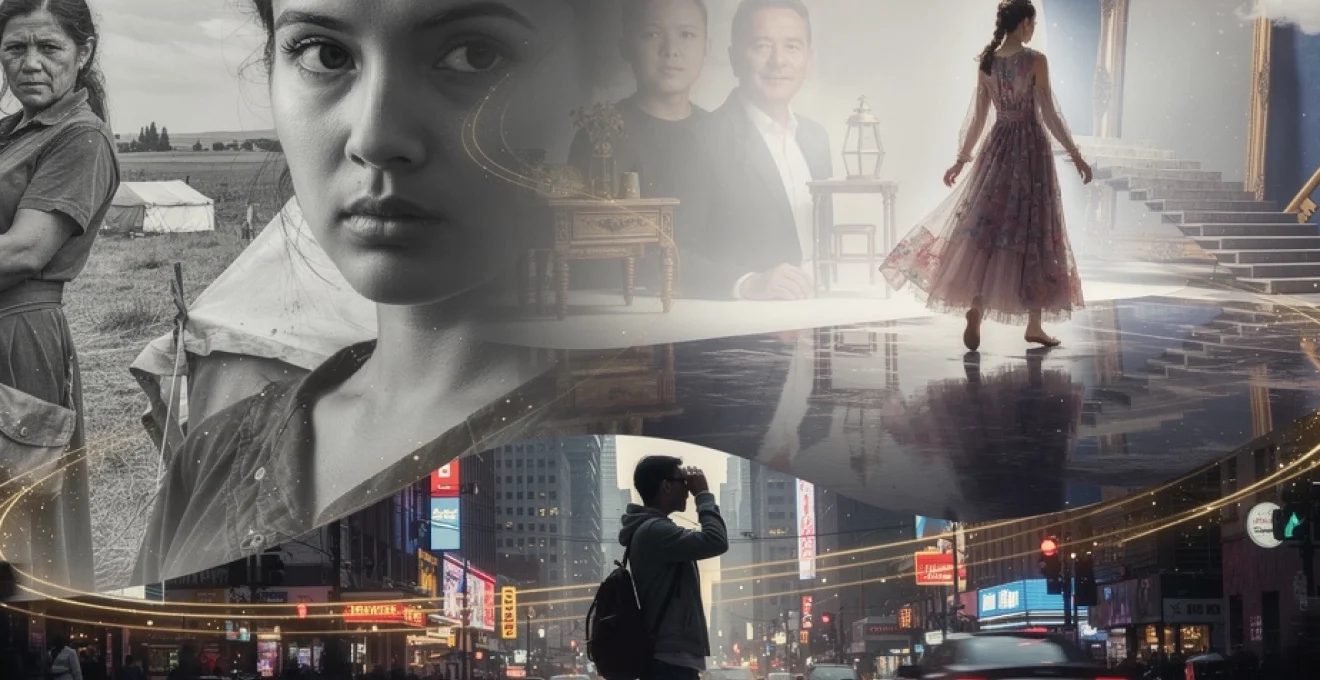
Photography transcends the simple act of capturing images—it serves as a universal language that communicates complex narratives, emotions, and truths across cultures and generations. Each photographic style possesses unique storytelling capabilities, employing distinct technical approaches, compositional strategies, and aesthetic choices to convey specific messages. From the raw authenticity of documentary photography to the controlled precision of commercial imagery, photographers harness various stylistic elements to craft compelling visual narratives that resonate with viewers on profound emotional and intellectual levels.
The power of visual storytelling lies not merely in the subject matter, but in how photographers manipulate technical elements such as lighting, composition, colour palettes, and timing to create meaning beyond the literal representation. Modern photography encompasses diverse approaches, each serving specific communicative purposes and addressing different audience needs. Understanding these stylistic distinctions enables both photographers and viewers to appreciate the sophisticated craft behind seemingly effortless images that shape our perception of reality and influence cultural discourse.
Documentary photography’s authentic narrative construction through social realism
Documentary photography stands as one of the most influential storytelling mediums, employing unvarnished realism to illuminate social conditions, human experiences, and historical moments with unprecedented authenticity. This photographic approach prioritises truth-telling over aesthetic manipulation, utilising natural lighting, candid compositions, and unposed subjects to create compelling narratives that drive social awareness and political change. Documentary photographers serve as visual journalists, chronicling everything from everyday life in marginalised communities to major historical events with meticulous attention to contextual detail.
The strength of documentary photography lies in its ability to present unfiltered reality whilst maintaining artistic integrity. Photographers working in this style must balance objective observation with subjective interpretation, making split-second decisions about framing, timing, and perspective that ultimately shape how stories are perceived and understood. The medium’s power extends beyond mere documentation—it serves as a catalyst for social consciousness, preservation of cultural memory, and advocacy for underrepresented voices in society.
Dorothea lange’s Depression-Era composition techniques in “migrant mother”
Lange’s iconic “Migrant Mother” exemplifies how compositional choices can transform documentary photography into powerful social commentary. The photographer employed tight framing to eliminate distracting background elements, focusing viewer attention entirely on Florence Owens Thompson’s weathered face and protective embrace of her children. This intimate cropping technique created psychological intimacy between subject and viewer, whilst the slight upward camera angle maintained the subject’s dignity despite her circumstances. Lange’s use of natural lighting emphasised the texture of worn clothing and lined faces, adding layers of narrative depth that communicate hardship without exploiting vulnerability.
Sebastião salgado’s Black-and-White tonal range for economic migration stories
Salgado’s mastery of black-and-white photography demonstrates how tonal range can enhance narrative impact in documentary work. His images of economic migration utilise rich contrast and graduated grey tones to create visual metaphors for the subjects’ experiences—darkness representing uncertainty and hardship, whilst highlights symbolise hope and resilience. The absence of colour forces viewers to focus on human expressions, gestures, and environmental details that might otherwise be overshadowed by chromatic distraction. This monochromatic approach creates timeless quality, allowing contemporary images to resonate with historical significance whilst emphasising universal human experiences across cultural boundaries.
Steve McCurry’s environmental context framing in conflict zone documentation
McCurry’s approach to conflict photography emphasises environmental context as a crucial narrative element, using wide-angle compositions that place human subjects within their physical and cultural settings. His famous “Afghan Girl” portrait gains additional power from subtle environmental details—the refugee camp setting implied through background elements and traditional clothing that speaks to cultural identity amidst displacement. McCurry’s colour palette choices, particularly his use of warm earth tones contrasted against vibrant fabrics, create visual tension that mirrors the emotional complexity of conflict situations whilst maintaining respect for his subjects’ humanity.
Mary ellen mark’s intimate distance control for marginalised community portraits
Mark’s documentary work demonstrates the critical importance of establishing appropriate psychological distance when photographing vulnerable populations. Her portraits of homeless youth, sex workers, and individuals struggling with mental illness utilise medium-range focal lengths that allow for intimate connection without invasive proximity. This technical choice enables subjects to maintain personal agency whilst sharing their stories, creating collaborative rather
collaboration between photographer and subject. Her consistent use of available light and careful background simplification prevents visual noise from overshadowing the emotional narrative, allowing viewers to focus on subtle gestures and expressions. By spending extended time with the communities she photographed, Mark built trust that translated into relaxed body language and honest moments, proving that ethical engagement is as critical to powerful storytelling as any technical choice. Her work reminds us that in documentary photography, visual storytelling begins long before the shutter is pressed, in the relationships we cultivate and the respect we demonstrate.
Portrait photography’s psychological depth through technical lighting mastery
Portrait photography harnesses controlled lighting and precise composition to reveal psychological depth and nuanced character traits. Unlike documentary photography, which often relies on available light and candid moments, portrait work allows photographers to deliberately sculpt light, shadow, and colour to shape how a subject’s inner world is perceived. This genre shows how different photography styles tell powerful visual stories by turning faces into narrative landscapes, where every highlight and shadow becomes part of the plot. Through techniques refined over centuries of art history, portrait photographers guide the viewer’s gaze and influence emotional interpretation in subtle yet profound ways.
At its core, portrait photography is a negotiation between how a subject sees themselves and how they are seen by others. Technical lighting mastery gives photographers the tools to honour that complexity, whether they are crafting a brand image, a fine art portrait, or an intimate family photograph. By understanding how directional light, contrast ratios, and background control shape mood, we can move beyond simple likeness and toward meaningful visual storytelling. In an era where millions of images are shared daily, portraits that employ thoughtful lighting and composition stand out by offering depth rather than mere decoration.
Rembrandt lighting’s chiaroscuro effect for character revelation
Rembrandt lighting, characterised by a small triangle of light under the eye on the shadow side of the face, borrows directly from classical painting to create cinematic storytelling in portrait photography. This technique uses a single key light placed at roughly 45 degrees to the subject and above eye level, producing strong directional shadows that carve out facial features and suggest psychological complexity. The chiaroscuro effect—the interplay of light and dark—functions like a visual metaphor, hinting at the tension between a subject’s public persona and private interior life. When you want a portrait to feel introspective, mysterious, or dramatic, Rembrandt lighting becomes a powerful narrative tool.
Because this pattern emphasises texture and depth, it is especially effective for character portraits, executive headshots, or artistic self-portraits where personality and life experience are central to the story. Subtle adjustments to fill light allow photographers to fine-tune the mood: a higher contrast ratio suggests conflict or gravitas, while a softer fill introduces empathy and warmth. Rembrandt lighting shows how even a single, well-placed light can transform a simple likeness into a story-rich image that invites viewers to imagine what the subject has lived through, thought, or felt.
Annie leibovitz’s environmental portrait integration with celebrity personas
Annie Leibovitz is renowned for turning celebrity portraits into full-scale visual narratives by embedding subjects within elaborate environments that reflect, exaggerate, or challenge their public image. Rather than isolating the face against a neutral background, she constructs sets, chooses meaningful locations, and uses theatrical lighting to weave character, context, and symbolism into one frame. This environmental portrait approach shows how different photography styles tell powerful visual stories by blending elements of portraiture, fashion, and conceptual art. Each object, prop, and colour choice is part of a visual script that tells us who this person is—or how they are perceived in culture.
Leibovitz’s lighting strategies often combine soft, flattering key light on the subject with more dramatic background illumination, ensuring the environment supports the narrative without overpowering the face. For photographers inspired by her work, the key lesson is intentionality: every visual element should answer a narrative question. Why this location? Why this wardrobe? Why this pose? By asking these questions before shooting, you can create environmental portraits of business leaders, artists, or everyday clients that communicate far more than profession or status; they reveal values, aspirations, and identity.
Richard avedon’s stark white background psychology for unguarded expression
Richard Avedon took the opposite route to environmental portraiture, stripping away all context with his signature stark white background. This minimalist approach places absolute emphasis on expression, gesture, and the micro-details of the human face and body. With no environmental clues to lean on, viewers are compelled to read the subject’s posture, gaze, and clothing for psychological cues, making the image feel almost forensic in its honesty. The white void acts like a psychological stage, where every small movement becomes emotionally loaded.
In practical terms, Avedon’s style demonstrates how simplifying the frame can intensify a narrative. By using even, shadowless lighting and a high-key exposure, distractions vanish and the subject’s emotional state becomes the sole focus. For photographers working on corporate headshots, actor portraits, or editorial series, adopting a variation of this approach can reveal unguarded expression, especially when combined with longer sessions that allow subjects to gradually drop their social mask. It’s a reminder that visual storytelling in portrait photography doesn’t always require complex sets; sometimes the most powerful story emerges when nothing stands between the viewer and the subject.
Yousuf karsh’s dramatic shadow placement for political figure authority
Yousuf Karsh built his legacy by photographing political leaders and cultural icons with lighting that conveyed authority, resilience, and gravitas. His precise shadow placement—often using a focused key light and carefully positioned kicker or hair light—created sculpted, three-dimensional faces that seemed to emerge from darkness. This kind of controlled contrast signals power, decisiveness, and emotional strength, aligning perfectly with the narratives surrounding heads of state and historic figures. Karsh’s technical discipline shows how lighting choices can align with, or subtly critique, the mythologies surrounding public personalities.
Karsh frequently used darker backgrounds and tailored his light to emphasise eyes and hands, treating them as narrative anchors that revealed intelligence and intent. For photographers crafting portraits of leaders—whether CEOs, activists, or politicians—borrowing aspects of Karsh’s approach can add a sense of weight and purpose to the image. The key is to balance drama with humanity: shadows should add depth and presence without dehumanising the subject. When done well, this style of portrait photography shows how different photography styles tell powerful visual stories about power, responsibility, and character.
Street photography’s urban narrative through decisive moment capture
Street photography specialises in capturing unplanned, often fleeting interactions that reveal the character of urban life. Rooted in the idea of the “decisive moment” popularised by Henri Cartier-Bresson, this style depends on anticipation, quick reflexes, and an acute awareness of how people move through public spaces. Unlike staged genres, street photography’s power lies in the authenticity of unscripted scenes, where gesture, light, and environment converge for a fraction of a second. These moments function like visual haiku: brief, concentrated observations that hint at larger social stories.
From a storytelling perspective, street photography transforms sidewalks, markets, and transport hubs into living theatre. Framing, timing, and lens choice allow photographers to emphasise tension, humour, loneliness, or community within the same city block. To tell stronger street stories, you might work a single location for an extended period, watching how light shifts and how people’s routines form recurring patterns. This patient approach reveals how different photography styles tell powerful visual stories about urban culture, inequality, belonging, and change—without a single word of text.
Fine art photography’s conceptual storytelling via surreal visual metaphors
Fine art photography often moves beyond literal representation to explore ideas, emotions, and philosophies through conceptual construction. Instead of recording what is, fine art photographers frequently build what could be, using surreal visual metaphors and carefully staged scenarios to externalise inner states. This approach is similar to poetry: reality is bent, rearranged, or layered until it reflects a psychological or symbolic truth rather than a documentary one. Whether through composite imagery, long exposures, or unusual perspectives, fine art photography invites viewers to interpret rather than simply observe.
Surreal storytelling might involve placing ordinary objects in unexpected contexts, manipulating scale, or using colour and fog like a painter uses brushstrokes. For instance, a floating chair in an empty field or a figure repeated multiple times within a single frame can become metaphors for absence, memory, or identity. These symbolic choices demonstrate how different photography styles tell powerful visual stories that are open-ended, encouraging viewers to project their own experiences onto the image. If you’re developing a conceptual project, sketching ideas first—like a storyboard—can help you clarify the metaphor you want to communicate before you ever pick up the camera.
Photojournalism’s breaking news impact through Split-Second technical precision
Photojournalism is the high-pressure cousin of documentary photography, focused on breaking news events where timing and accuracy are paramount. Photographers operate in rapidly changing, often hazardous environments, yet are expected to produce technically sound, context-rich images that can be published within minutes. In this space, visual storytelling is directly tied to public understanding of crises, elections, disasters, and protests. A single frame can influence global perception, policy discussions, and humanitarian responses, making the ethical and technical demands of this style especially intense.
To succeed, photojournalists must master their equipment to the point of instinct, adjusting exposure, focus, and composition almost unconsciously. They also need a deep awareness of narrative context: Which moment best summarises the event? Which perspective avoids sensationalism while still communicating urgency? As newsrooms increasingly rely on real-time digital workflows, the ability to transmit, caption, and verify images quickly has become part of the storytelling craft. In this way, photojournalism shows how different photography styles tell powerful visual stories not just through aesthetics, but through speed, accuracy, and trust.
James nachtwey’s war zone composition under extreme pressure conditions
James Nachtwey is widely regarded for his ability to construct clear, dignified compositions in the chaos of war zones and humanitarian crises. His images often employ leading lines, layered foregrounds and backgrounds, and careful subject placement that guide the viewer through complex scenes. Even amid smoke, debris, and movement, his frames feel organised, allowing us to grasp both individual suffering and broader context. This clarity is not accidental; it’s the result of years of practice making compositional decisions under extreme pressure where hesitation could mean missing the story—or risking personal safety.
Nachtwey tends to avoid overly graphic sensationalism, instead choosing moments that convey emotion and consequence without stripping subjects of their humanity. This balance demonstrates an essential principle for anyone practising conflict photography: the most impactful images often suggest violence or loss through implication and context rather than explicit gore. By prioritising composition that respects both subject and viewer, Nachtwey’s work exemplifies how disciplined visual structure can amplify the ethical power of photojournalistic storytelling.
Lynsey addario’s Gender-Sensitive approach to conflict photography ethics
Lynsey Addario has become an influential voice in conflict photography not only for her images, but also for her gender-sensitive approach to ethical storytelling. Working in regions where cultural norms restrict access to women’s spaces, she leverages her identity to document stories often invisible in mainstream coverage—maternal health crises, domestic spaces in war, and the impact of conflict on girls’ education. Her photographs demonstrate that who holds the camera can shape which narratives reach global audiences. This highlights a crucial insight: diversity among photographers leads to diversity in visual stories.
Addario places strong emphasis on informed consent, privacy, and long-term impact, especially when photographing survivors of sexual violence or displacement. She often spends time without the camera first, building trust and understanding before documenting sensitive situations. For photographers interested in humanitarian or social justice work, her approach underscores the need to combine technical skill with cultural literacy and trauma-informed practice. Visual storytelling in conflict zones must answer not only, “Is this powerful?” but also, “Is this fair, necessary, and respectful?”
Tyler hicks’s Real-Time crisis communication through digital workflow
Tyler Hicks, a staff photographer for major international newspapers, exemplifies the modern photojournalist’s challenge: capture decisive moments and deliver them to global audiences in near real-time. His workflow often involves shooting, editing, adding accurate metadata, and transmitting images from the field within minutes, sometimes using satellite connections or mobile hotspots. This rapid pipeline turns photographs into immediate crisis communication tools, influencing how unfolding events are understood around the world. Technical precision in exposure, white balance, and focus becomes even more critical when there is little time for post-processing correction.
Hicks’s work illustrates how digital tools—lightweight mirrorless cameras, robust memory cards, and secure file transfer protocols—have become integral to storytelling, not just logistical afterthoughts. For photographers covering fast-moving events such as protests, natural disasters, or elections, developing a streamlined workflow can be as important as mastering composition. Preparing metadata templates, backup plans, and secure archiving systems in advance ensures that, when a story breaks, you can focus on seeing and reacting rather than troubleshooting gear. In this sense, the modern photojournalist’s narrative craft extends from the moment of capture all the way to the newsroom server.
Commercial photography’s brand narrative construction through controlled visual elements
Commercial photography uses the full spectrum of technical control—lighting, colour, styling, set design, and post-production—to tell stories that align with brand identity and marketing goals. Unlike photojournalism, where neutrality and spontaneity are central, commercial work is deliberately constructed to evoke specific emotions and actions in a target audience. A product shot might communicate luxury, sustainability, or innovation purely through lighting and material texture, while a lifestyle campaign suggests aspiration and belonging through casting and location choices. This strategic storytelling shows how different photography styles tell powerful visual stories that influence purchasing decisions and brand loyalty.
In practical terms, every visual element in a commercial image acts like a word in a carefully crafted sentence. Colour palettes reinforce brand psychology—cool blues for trust, warm oranges for energy—while composition directs attention toward key messages, such as a logo or product feature. For example, a shallow depth of field can isolate a beverage can in sharp focus while a soft, sunlit background hints at relaxation and social connection. By aligning these visual choices with a brand’s core values and audience insights, photographers become co-authors of the broader marketing narrative, not just technicians for hire.
To create effective brand narratives, it helps to think in terms of visual consistency across campaigns and platforms. Does your lighting style match the tone of the copywriting? Do your model choices reflect the diversity of your real customer base? Are you using recurring visual motifs—like a certain angle, prop, or colour accent—that make your imagery instantly recognisable? Treating these decisions as part of a larger story arc allows commercial photography to move beyond one-off adverts and toward cohesive visual storytelling that builds trust over time.
From social realism in documentary work to surreal metaphor in fine art, each photographic style offers unique tools for shaping how we see and feel about the world. By understanding the narrative strengths of documentary, portrait, street, fine art, photojournalism, and commercial photography, you can choose the approach that best supports the story you need to tell. And whether you are working with natural light on a city street or a full studio setup for a global brand, the underlying challenge remains the same: use every visual decision—light, colour, timing, and context—to transform a simple image into a powerful visual story.