
When metal’s already cut and you spot a missing cable entry, that’s £3,000 down the drain. I watched this happen last month in Birmingham—a panel builder approved a PDF screenshot instead of the actual drawing revision. The real problem wasn’t the error itself. It was discovering it three weeks too late, after powder coating. Engineering feedback isn’t about catching mistakes; it’s about surfacing them while they’re still cheap to fix.
Your risk cut in 45 seconds: the 3 rules to follow
- Never approve cutting without a frozen revision number—screenshots and “almost final” drawings cost weeks
- Get DFM feedback within 48 hours of RFQ submission to catch tolerance and assembly issues early
- Run a physical fit check before production, especially for IP-rated enclosures with gasket paths
You know the pattern. Your electrical design team needs a custom enclosure. Purchasing sends out the RFQ. The supplier quotes quickly. Everything looks good on paper. Then reality hits during assembly: holes don’t align, the gasket path breaks, or the powder coating thickness wasn’t accounted for in the clearances.
In my day-to-day work supporting OEMs and panel builders, the most expensive mistake I keep seeing is shipping an “almost final” drawing with no revision discipline. In my UK perimeter (2023–2026, OEM/panel-builder projects), that often turns into a 2–4 week slip once the metal is already cut. This isn’t universal—it varies a lot with supplier engineering bandwidth, the complexity of cut-outs, and whether you run a proper first article.
What “fast engineering feedback” actually covers (and what it doesn’t)
Early technical clarification and design validation between your team and the fabricator, covering DFM notes, tolerance checks, and assembly risks before commitment to tooling or cutting.
Let me be clear about what this actually means. Fast engineering feedback isn’t about rushing production. It’s the opposite—it’s about getting the dangerous questions answered before anyone touches metal.
I still remember a review session with Nadia (lead design engineer at a UK OEM I support). It was raining outside the workshop, and we were staring at two STEP files with the same name but different cut-outs. The supplier didn’t “mess up”—we did, by letting revision control slip. The fix was simple: one naming convention, one approval checkpoint, and a written ‘stop/go’ before cutting.

What engineering feedback doesn’t cover is equally important. It’s not a design service. Your supplier shouldn’t be creating your mounting patterns or deciding your IP requirements. They’re validating whether what you’ve designed can be built efficiently and will work as intended.
The classic trap is thinking faster feedback means faster shipping. Actually, DFM cost impact study shows that ignoring DFM rules typically increases sheet metal project costs by 25-40% through redesigns. Those two days spent on clarification at the start? They save two weeks of panic at the end.
A 5-checkpoint feedback loop that cuts enclosure risk
After watching dozens of projects slip, I’ve distilled the process down to five critical checkpoints. You can copy this framework straight into your next RFQ.

The 5 checkpoints you can copy into your next RFQ
-
RFQ Pack Submission (Day 0)
Send your complete package: 2D PDF with dimensions, 3D STEP file, requirements list (IP rating, finish, quantities), and your revision naming convention. Tell the supplier you expect questions within 48 hours.
-
Clarifying Questions (Day 2-3)
Review their feedback list. Good suppliers ask about bend radii, tolerance stack-ups, masking requirements, and grounding points. No questions usually means they haven’t looked properly.
-
DFM Review & Rev Freeze (Day 5-6)
Lock down Rev A with written confirmation. Highlight critical dimensions. Agree which surfaces need masking for electrical continuity. This is your stop/go gate before cutting.
-
First Article Build (Day 10-15)
Physical validation with actual components. Check cable entries align, DIN rails fit, gasket compression is uniform. Document any adjustments needed for Rev B.
-
Production Release (Day 16+)
Final revision released with first article inspection record. Any changes after this point need formal change control (ECO/ECN) with cost and timeline impact assessed.
Checkpoint 1–2 (before quoting): RFQ pack + clarifying questions
Your RFQ pack sets the tone. A vague request gets vague feedback. When I coached Aisha (29, junior mechanical engineer) through her first sheet-metal DFM round in Leeds, her biggest surprise was how many questions a good supplier asks. “I thought they’d just quote what I sent,” she told me. Wrong. The ones who understand that fast engineering feedback beats rush production will probe every ambiguity upfront.
Here’s what catches people: you think more detail slows things down. Actually, ambiguity is what kills timelines. Specify your revision convention (Rev A, B, C or v1.0, v1.1), state your IP requirement with test context, and mark critical dimensions that can’t move.
Checkpoint 3–4 (before cutting): DFM notes + revision freeze
This is where projects live or die. You’ve received the DFM feedback—now you need discipline. Tom, a buyer at a Birmingham panel builder I worked with during an urgent enclosure RFQ, learned this the hard way. His team approved a PDF screenshot instead of the actual rev-controlled drawing. The cut-out pattern changed twice after “approval,” costing them £1,800 in rework.
The rule is simple: no cutting without a frozen revision. Get it in writing. Email subject line: “Rev A frozen for production – proceed.” Any change after this point is a new revision with a new approval cycle.
Checkpoint 5 (before finishing & assembly): fit check + first article record
Your first article isn’t just about checking dimensions. It’s about discovering what the drawings don’t show. Will the powder coating thickness affect your gasket seal? Does the grounding stud position actually work with your cable layout?
In practice, I use a simple ‘J+X’ rhythm to keep everyone aligned. You’re not trying to be perfect on day one—you’re trying to surface the dangerous questions early, then freeze the right things before cutting and before finishing.
Before you hit ‘send’: your RFQ pack sanity check
-
Include both 2D PDF (with dimensions) and 3D STEP file
-
State IP rating with intended mounting orientation
-
Mark critical dimensions and surfaces that need masking
-
Define your revision naming convention upfront
-
Request 48-hour turnaround for initial questions
Where projects derail: the 6 risks your feedback must surface early
Which risk would you bet your deadline on? Because that’s exactly what you’re doing when you skip proper feedback loops.
The painful truth is that most enclosure failures aren’t dramatic. They’re accumulations of small oversights that compound. Your gasket looks fine—until water ingress testing. Your mounting holes align perfectly—until powder coating adds 120 microns.
Critical revision control point: If you only fix one thing after reading this, make it revision discipline. Two files with the same name but different content have killed more projects than any technical failure.
IP rating design gaps top my list of expensive surprises. According to IEC 60529 standard, IP code testing conditions and methods must be followed to verify compliance. An IP rating is not a label—it’s a design plus test story. If you can’t explain the gasket path, fastener spacing, and test orientation, you don’t have the rating.
Then there’s the tolerance stack-up nightmare. Sheet metal bending isn’t precise to the millimetre. Add three bends, some welding, and a powder coat, and suddenly your perfectly designed 400mm panel is 403mm. Your DFM review needs to catch these accumulations before they cascade.
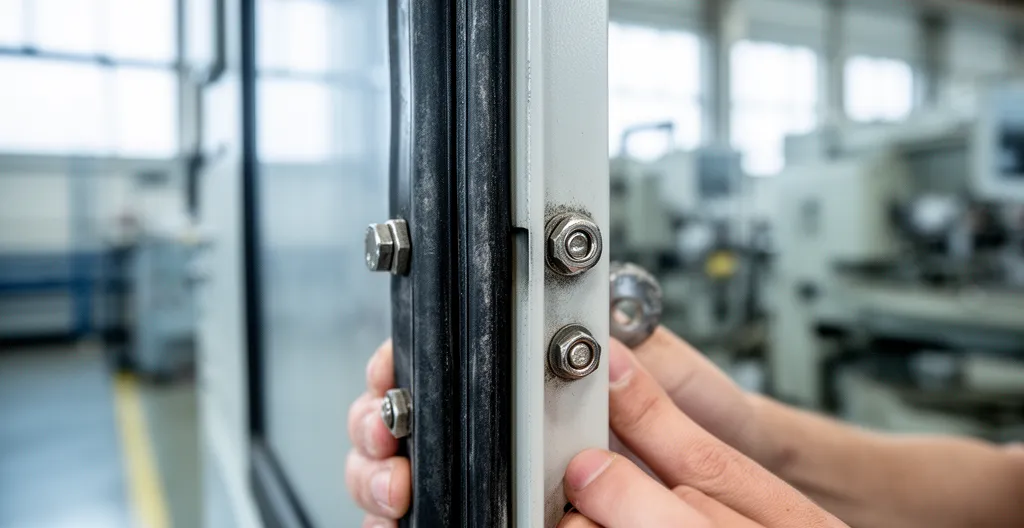
Powder coating thickness impact gets overlooked constantly. That 60-80 micron layer changes everything: thread engagement, gasket compression, grounding continuity. Mark your masking areas explicitly or watch your earthing points disappear under paint.
Don’t forget assembly sequence conflicts. Can you actually install that DIN rail once the side panels are welded? Will your cables reach if the entry plate is pre-punched in that position? These aren’t CAD problems—they’re physical reality problems.
Thermal management oversights hide until commissioning. Your ventilation slots look good in the model, but did anyone check if the internal heat load needs forced cooling? A feedback loop catches this mismatch before you’re retrofitting fans on site.
Finally, documentation gaps seem minor until audit time. UK government UKCA guidance states that businesses will have the flexibility to use either the UKCA or CE marking to sell products in Great Britain. But without proper technical documentation and traceability, that flexibility means nothing.
The questions I hear every week about custom metal enclosures
Your common doubts about custom enclosures (answered)
Do I really need to send both 2D and 3D files?
Yes, absolutely. Your 3D STEP file shows the geometry, but your 2D PDF carries the intelligence: dimensions, tolerances, notes, and revision number. Never rely on just one format—suppliers need both to quote accurately and manufacture correctly.
When is a prototype worth the cost and time?
Run a prototype when: you’re claiming an IP rating above IP54, the enclosure has complex cable management, you’re using it outdoors, or internal component positioning is tight. Skip it only for simple junction boxes or repeat orders with proven designs.
What if my supplier doesn’t provide DFM feedback?
That’s a red flag. A supplier who quotes without questions either isn’t looking closely or plans to “figure it out” during production. Push for specific feedback on bend radii, weld access, and tolerance stack-up. If they can’t discuss these, find another supplier.
How do I validate IP65 without expensive testing?
You can’t fully validate without testing, but you can design for success. Check gasket compression (typically 25-30%), verify continuous gasket paths, ensure adequate fastener spacing (typically 150-200mm), and review similar tested designs. Document your design rationale for the technical file.
What’s realistic for low-volume custom orders?
For quantities under 50 units, expect 3-4 weeks from approved drawings to delivery. The timeline barely changes whether you order 5 or 50—setup dominates. Focus on getting the design right first time, as low volumes make iteration expensive.
For your next project: Stop thinking of engineering feedback as a delay. Every question answered before cutting saves a potential crisis during assembly.
Rather than rushing to production, ask yourself this: would you rather spend two days on clarification now, or two weeks on rework later? If you take one thing from this guide, make it the discipline of frozen revisions. That single practice has saved more projects than any amount of planning.
Ce que ce guide ne remplace pas (et ce que je vous conseille de valider)
- Ce contenu est informatif et ne remplace pas une revue de conformité par un ingénieur responsable et/ou un organisme compétent.
- Les exigences varient selon le marché (GB, UE, US), l’usage (industriel, extérieur) et l’environnement (corrosion, lavage, UV).
- Une déclaration d’IP ou de conformité suppose des essais/méthodes documentées; ne validez jamais ‘sur la base d’une phrase’.
Risques explicites à considérer:
- Risque de non-conformité si la conception ne respecte pas la norme d’essai IP revendiquée.
- Risque de surcoûts et retards si une modification intervient après découpe/pliage ou après finition.
- Risque de défaut terrain si la gestion de révision est incohérente (mauvais fichier, mauvaise révision en atelier).
Pour toute validation finale, consultez un ingénieur qualifié, un bureau de contrôle, ou l’autorité/organisme compétent selon votre secteur.