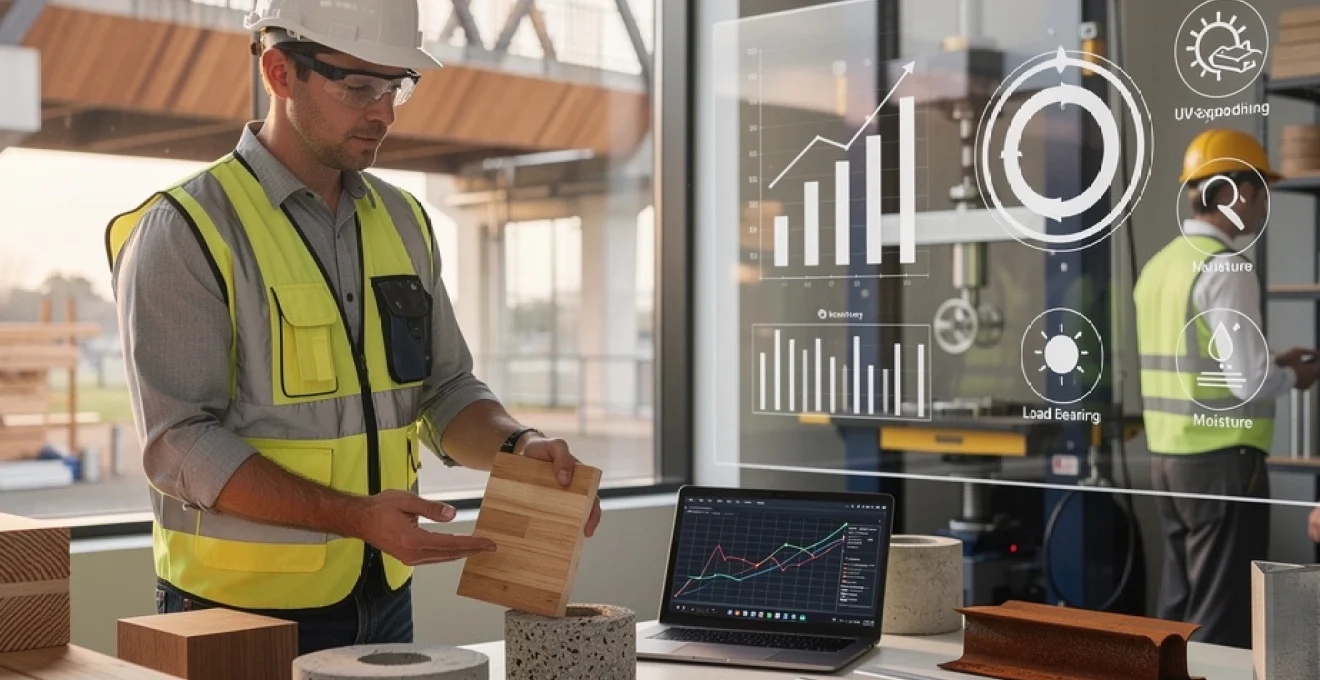
# Choosing the right materials for long-lasting results
Every construction project, whether residential, commercial, or industrial, hinges on a fundamental question: which materials will deliver the performance, longevity, and value you require? The difference between a structure that endures for generations and one that demands constant repair often comes down to informed material selection. With advances in material science, testing protocols, and sustainability requirements reshaping the construction landscape, understanding the nuances of durability, performance characteristics, and lifecycle costs has never been more critical. The materials you choose today will determine not only immediate construction success but also decades of operational efficiency, maintenance expenditure, and structural integrity.
Modern construction demands more than aesthetic appeal or initial cost savings. Engineers, architects, and project managers must navigate complex performance standards, environmental regulations, and client expectations whilst ensuring that selected materials withstand the specific stresses of their intended application. From coastal environments where salt-laden air accelerates corrosion to high-traffic industrial zones requiring exceptional abrasion resistance, the right material choices separate successful projects from costly failures. The challenge lies in balancing immediate project requirements with long-term performance expectations, all whilst maintaining budgetary constraints and sustainability commitments.
Material durability classification systems and performance standards
Understanding how materials are tested, classified, and rated provides the foundation for informed selection decisions. International standards organisations have developed comprehensive frameworks that allow you to compare materials objectively across multiple performance criteria. These classification systems remove guesswork from the specification process, replacing subjective assessments with quantifiable data that predict real-world performance under various conditions. When you familiarise yourself with these standards, you gain the ability to evaluate manufacturer claims critically and select materials with confidence based on verifiable evidence rather than marketing assertions.
ISO 9001 and ASTM international testing protocols
The International Organization for Standardization (ISO) and ASTM International establish rigorous testing methodologies that provide consistent, reproducible data across materials and manufacturers. ISO 9001 certification indicates that a manufacturer maintains quality management systems ensuring consistent production standards, whilst ASTM protocols define specific testing procedures for material properties. These frameworks cover everything from tensile strength measurements to thermal expansion coefficients, creating a common language for specifying performance requirements. When you encounter materials tested according to ASTM D638 for tensile properties or ASTM C39 for concrete compressive strength, you’re accessing data generated under controlled conditions that allow meaningful comparisons between competing products.
Recent updates to testing protocols have incorporated accelerated ageing procedures that simulate decades of environmental exposure in compressed timeframes. These methodologies expose materials to cyclic temperature variations, UV radiation, moisture infiltration, and mechanical stress patterns that replicate field conditions. The resulting data provides predictive modelling capabilities that help you anticipate how materials will perform throughout their expected service life, not merely at installation. Current research indicates that materials meeting enhanced ASTM weathering standards demonstrate up to 40 percent better long-term performance retention compared to those tested under previous protocols.
Weathering resistance ratings and UV degradation metrics
Ultraviolet radiation represents one of the most destructive environmental factors affecting exposed materials, breaking down molecular bonds and causing discolouration, chalking, and mechanical property loss. Weathering resistance ratings quantify a material’s ability to maintain appearance and functionality when subjected to solar radiation, temperature fluctuations, and moisture cycles. The ASTM G154 and ISO 4892 standards establish accelerated weathering test procedures using specialised equipment that concentrates UV exposure and moisture application to simulate years of outdoor exposure in weeks or months.
Materials receive weathering classifications based on retention of colour stability, gloss, tensile strength, and impact resistance after standardised exposure periods. Premium exterior materials typically retain at least 80 percent of their original properties after 2,000 hours of accelerated weathering, equivalent to approximately 10-15 years of outdoor exposure in temperate climates. For projects in high-UV environments such as equatorial regions or high-altitude locations, selecting materials with enhanced weathering ratings becomes particularly critical. Advanced polymer formulations now incorporate UV stabilisers and hindered amine light stabilisers (HALS) that extend service life by 50-70 percent compared to unprotected alternatives.
Load-bearing capacity and structural integrity assessments
Structural materials must satisfy rigorous load-
bearing capacity and serviceability criteria defined by national and international design codes. Standards such as Eurocode, ACI, and AS/NZS prescribe partial safety factors, load combinations, and deflection limits that materials must satisfy when used in structural systems. Laboratory tests including compressive strength, flexural strength, modulus of elasticity, and fatigue resistance create a performance profile that engineers use to size beams, columns, slabs, and connections appropriately. When you review test reports aligned with ASTM E72 for racking strength or ISO 6892 for tensile testing of metals, you gain insight into how a material will behave not only under static loads, but also under cyclic and impact conditions common in real-world applications.
For long-lasting results, it is not enough that a material simply “passes” a strength test; it must maintain those properties throughout its design life. Progressive cracking, creep deformation, and fatigue damage can all reduce structural capacity over time if initial safety margins are insufficient. This is why design codes increasingly incorporate performance-based approaches, where materials are evaluated under realistic load histories rather than single ultimate tests. By prioritising materials with proven track records in independent structural integrity assessments, you reduce the risk of premature failure and unplanned strengthening works, which can be significantly more expensive than initial over-specification.
Corrosion resistance categories for marine and industrial environments
In aggressive environments, corrosion is often the primary factor limiting material durability. International standards such as ISO 12944 and ISO 9223 classify atmospheric corrosivity into categories ranging from C1 (very low) to CX (extreme), based on factors like airborne salinity, industrial pollutants, and humidity. These categories guide the selection of protective coatings, stainless steel grades, and non-ferrous alloys suitable for coastal, offshore, and heavy industrial projects. For instance, a structural steel element located within a few hundred metres of the shoreline faces a vastly different corrosion profile than an equivalent member in a dry inland climate, even if their mechanical loads are identical.
When you match materials and coatings to the correct corrosivity category, you extend maintenance intervals and slow section loss that can compromise structural capacity. Hot-dip galvanised steel with a high zinc coating thickness may deliver 30–50 years of protection in a C3 environment, yet only 10–20 years in a CX marine exposure without supplementary coatings. Similarly, stainless steel 304 may perform adequately in urban atmospheres but suffer pitting and crevice corrosion near seawater, where grade 316 or duplex 2205 is more appropriate. Evaluating corrosion resistance in context ensures that your long-term durability strategy reflects environmental reality, not optimistic assumptions.
Engineered timber vs hardwood species for structural applications
The resurgence of timber in modern construction has expanded your choices far beyond traditional sawn lumber. Engineered wood products and carefully selected hardwood species now compete directly with steel and concrete in many structural applications. Choosing between these options requires a nuanced understanding of how manufacturing processes, species characteristics, and moisture behaviour influence performance over decades. Whilst timber offers compelling sustainability credentials and aesthetic warmth, long-lasting results depend on matching the right product to the right role under the right environmental conditions.
Cross-laminated timber (CLT) and glulam performance characteristics
Cross-laminated timber (CLT) and glued laminated timber (glulam) transform relatively small-dimension lumber into large, high-performance structural elements. CLT panels consist of multiple layers of boards arranged at right angles and bonded with structural adhesives, creating plate-like elements with impressive in-plane and out-of-plane stiffness. Glulam, by contrast, uses parallel laminations to form beams and columns with superior strength-to-weight ratios compared to solid timber of the same dimensions. Both systems benefit from factory-controlled manufacturing, which reduces variability and defects such as knots and checks that often limit the capacity of traditional sawn sections.
From a durability perspective, engineered timber’s layered construction can actually enhance performance, provided moisture is carefully managed. Adhesive lines act as barriers to crack propagation, and the ability to select laminations from higher-grade stock improves consistency. Fire design is addressed through predictable charring rates, and numerous tests have shown that correctly detailed CLT and glulam maintain load-bearing capacity for defined fire durations. If you are considering engineered timber for long-span roofs or multi-storey residential projects, it is essential to review third-party certification, bonding standards (such as EN 14080), and service class limitations to ensure that long-term stiffness and strength are preserved.
European oak, iroko, and teak dimensional stability comparisons
When structural performance must be combined with high durability in exposed or semi-exposed applications, premium hardwood species become strong candidates. European oak, Iroko, and teak are frequently specified for external joinery, bridges, and marine works due to their natural resistance to decay and dimensional stability. However, their behaviour under moisture cycling differs in meaningful ways. European oak offers excellent strength and good stability, but its tannin content can cause staining when in contact with metals. Iroko, often described as “African teak”, provides good resistance to fungal attack and moderate movement, making it suitable for decking and external framing where cost is a concern.
Teak remains the benchmark for dimensional stability and water resistance, particularly in marine and high-humidity environments. Its natural oils and tight grain structure limit swelling and shrinkage, reducing the risk of warping and checking over time. That said, teak’s premium price and supply constraints mean it is often reserved for critical applications where failure would be particularly costly. When you compare hardwood options, it helps to think of them as you might high-performance tyres: each species is optimised for a particular balance of grip, longevity, and cost. Matching those attributes to your project’s exposure and maintenance expectations is key to achieving long-lasting results.
Moisture content requirements and seasoning methodologies
Timber durability is inseparable from moisture control. The moisture content at installation, and its expected variation in service, govern everything from dimensional stability to susceptibility to fungal decay. Standards typically recommend moisture contents between 12–18 percent for most structural applications, depending on climate and indoor versus outdoor exposure. Seasoning methodologies—air drying, kiln drying, or a combination—aim to bring timber to equilibrium with its intended service environment while minimising internal stresses that lead to distortion.
Air drying offers lower energy consumption but slower, less precise results, whereas kiln drying delivers tighter control and uniformity at the cost of higher energy use. Improperly seasoned timber can behave much like a sponge placed in a fluctuating environment: repeated cycles of absorption and desorption lead to swelling, shrinkage, and ultimately cracking or joint failure. By insisting on documented moisture content measurements (often taken with calibrated resistance or capacitance meters) and specifying seasoning to recognised standards, you protect against long-term movement that can compromise cladding, flooring, and structural connections.
Janka hardness scale and abrasion resistance factors
The Janka hardness scale provides a straightforward measure of a wood species’ resistance to indentation, making it a useful proxy for surface durability in high-traffic or high-impact areas. Species such as European oak typically register around 1,100–1,200 lbf on the Janka scale, while Iroko and teak fall in a similar or slightly higher range depending on source and density. Softer timbers, by contrast, may mark, dent, or wear much more quickly, leading to a tired appearance and higher maintenance needs even if structural capacity remains adequate.
Abrasion resistance, though related to hardness, also depends on grain structure, finish systems, and the direction of wear relative to the grain. For floors, stairs, and exposed decking where repeated mechanical action is inevitable, selecting a species with higher Janka hardness and pairing it with durable finishes (such as factory-applied UV-cured coatings) significantly extends service life. Think of the Janka value as you might the wear rating on a car tyre: it does not tell you everything, but it gives a clear indication of how the material will stand up to daily use over many years.
High-performance concrete formulations and aggregate selection
Concrete remains the backbone of modern construction, yet its performance envelope continues to evolve. High-performance concrete (HPC) formulations now achieve compressive strengths well above 60 MPa whilst offering enhanced durability against chloride ingress, freeze-thaw cycles, and chemical attack. Achieving these outcomes requires a holistic approach to mix design, where binders, aggregates, water content, fibres, and admixtures are optimised to work in concert. When you understand how each component influences long-term behaviour, you can tailor concrete mixes to the specific durability demands of your project rather than relying on generic “one size fits all” specifications.
Portland cement alternatives: geopolymer and slag-based binders
Traditional Portland cement production is energy intensive and contributes significantly to global CO₂ emissions. In response, alternative binders such as geopolymers and slag-based systems are gaining ground, particularly where durability and sustainability are dual priorities. Geopolymer concretes utilise industrial by-products like fly ash or metakaolin activated with alkaline solutions, producing a three-dimensional aluminosilicate network with excellent resistance to sulphate and acid attack. Slag-based binders, often combined with a portion of Portland cement, enhance resistance to chloride penetration and reduce heat of hydration—valuable benefits for mass concrete and marine structures.
From a durability standpoint, these alternative binders can outperform conventional mixes in aggressive environments, extending service life while reducing maintenance. However, successful implementation hinges on careful control of curing regimes, activator chemistry, and compatibility with local aggregates. If you are considering geopolymer or slag-based concretes, pilot trials and collaboration with experienced suppliers are essential to ensure that laboratory performance translates into reliable, repeatable results on site.
Fibre reinforcement options: steel, polypropylene, and basalt
Fibre reinforcement introduces distributed tensile capacity into concrete, controlling crack widths and improving impact and fatigue resistance. Steel fibres are widely used for industrial floors, tunnel linings, and precast elements where toughness and post-cracking behaviour are critical. Polypropylene fibres, typically micro-sized, excel at controlling plastic shrinkage cracking in the early hours after casting and can enhance fire spalling resistance. Basalt fibres, a newer option made from volcanic rock, offer high tensile strength and excellent chemical stability, making them attractive for applications where corrosion of steel fibres might be a concern.
Choosing the right fibre type and dosage is analogous to selecting reinforcement for a tailored suit: too little offers negligible benefit, whilst too much can create workability challenges and unnecessary cost. Design guidance from bodies such as ACI and fib provides frameworks for quantifying fibre contributions to flexural toughness and crack control. By integrating fibre reinforcement strategically, you can reduce the need for conventional bar reinforcement in certain elements, simplify detailing, and enhance long-term durability by limiting crack widths that would otherwise admit water and aggressive ions.
Water-cement ratio optimisation for compressive strength
The water-cement (w/c) ratio is one of the most influential parameters in concrete durability. Lower w/c ratios generally produce denser, stronger, and less permeable concretes, which are more resistant to chloride ingress, carbonation, and freeze-thaw damage. However, excessively low w/c ratios can compromise workability, leading to inadequate compaction and voids that negate theoretical gains in strength and durability. Optimal ranges typically fall between 0.35 and 0.50 depending on the intended exposure class and required compressive strength.
By treating the w/c ratio as a critical design variable rather than an afterthought, you directly influence the long-term performance of foundations, slabs, and structural frames. On site, this means resisting the temptation to “water up” mixes for ease of placement—a practice that may solve immediate handling issues but quietly erodes durability. Using plasticisers and superplasticisers allows you to maintain low w/c ratios while achieving the workability necessary for dense placement and proper consolidation, particularly in heavily reinforced or complex formwork.
Admixtures for freeze-thaw cycle protection and workability enhancement
Admixtures function as the fine-tuning instruments of concrete technology, enabling you to adapt a base mix to specific environmental and construction constraints. In climates subject to repeated freeze-thaw cycles, air-entraining admixtures introduce a controlled system of microscopic air bubbles that provide relief spaces for expanding water, dramatically reducing scaling and surface distress. Without this protection, even high-strength concrete can deteriorate prematurely under harsh winter conditions, especially when de-icing salts are present.
Workability-enhancing admixtures such as plasticisers and superplasticisers improve flow without increasing water content, supporting low w/c ratios and high-density placement. Retarders and accelerators adjust setting times to suit temperature and construction sequencing, while corrosion-inhibiting admixtures mitigate reinforcement corrosion in chloride-laden environments. Selecting the right admixture package is much like choosing the correct settings on a precision machine: when done thoughtfully, it optimises performance, reduces defects, and contributes significantly to the durability of the finished structure.
Metal alloys and surface treatment technologies
Metals offer unparalleled strength and versatility, but their long-term performance is heavily influenced by alloy composition and surface protection strategies. In corrosive or high-stress environments, the difference between a generic alloy and a carefully specified grade can equate to decades of additional service life. Similarly, surface treatments such as galvanisation, anodising, and powder coating act as the first line of defence against environmental attack. Understanding how these technologies interact allows you to design metal components that not only meet initial structural demands but also maintain their integrity and appearance with minimal intervention.
Stainless steel grades: 304, 316, and duplex 2205 applications
Stainless steels derive their corrosion resistance from a thin, self-healing passive film rich in chromium and, in some cases, molybdenum and nitrogen. Grade 304, the most common austenitic stainless steel, performs well in many indoor and mildly corrosive outdoor settings. However, in marine or heavily polluted urban environments, its resistance to pitting and crevice corrosion can be insufficient. Grade 316, with added molybdenum, offers significantly better performance in chloride-bearing atmospheres, making it the preferred choice for coastal balustrades, façades, and fixings.
Duplex stainless steels such as 2205 combine austenitic and ferritic microstructures, delivering higher strength and superior resistance to stress corrosion cracking and pitting. This makes them ideal for demanding applications such as offshore platforms, chemical processing equipment, and highly exposed structural components where failure would be catastrophic. While duplex alloys typically carry a higher upfront cost than 304 or 316, their longer service life and reduced maintenance can produce favourable life-cycle economics, particularly in aggressive environments.
Hot-dip galvanisation vs powder coating longevity
For carbon steel components, protective coatings are essential to prevent corrosion and section loss. Hot-dip galvanisation immerses steel in molten zinc, forming a metallurgically bonded zinc-iron alloy layer topped with pure zinc. This coating offers both barrier protection and sacrificial action, meaning it will continue to protect even if the surface is scratched. Powder coating, by contrast, applies a thermoset or thermoplastic polymer film electrostatically, then cures it to form a durable, decorative finish with good resistance to chipping and UV degradation when properly formulated.
So which option delivers longer-lasting results? In many structural applications, a duplex system—galvanising followed by powder coating—combines the strengths of both. The zinc layer provides robust corrosion resistance, while the powder coat enhances aesthetics and adds an additional barrier to moisture and pollutants. In less aggressive environments, well-specified powder coating alone may suffice, but in marine or industrial atmospheres, galvanising (with or without a topcoat) often yields the most reliable life-cycle performance. The key is to align coating thickness, preparation standards, and inspection regimes with the expected corrosivity category and maintenance strategy.
Aluminium 6061-T6 and 6063-T5 extrusion properties
Aluminium alloys 6061-T6 and 6063-T5 are mainstays in architectural and structural extrusions. Alloy 6061-T6 offers higher strength and is well suited to load-bearing frames, trusses, and machined components. Its mechanical properties, combined with good weldability and corrosion resistance, make it a popular choice for canopies, walkways, and light structural elements where weight reduction is a priority. Alloy 6063-T5, by contrast, is optimised for excellent extrudability and superior surface finish, lending itself to intricate profiles such as window frames, curtain wall mullions, and decorative sections.
Both alloys form a protective oxide layer that resists atmospheric corrosion, but surface treatments such as anodising or powder coating further enhance durability and aesthetic longevity. When you choose between 6061 and 6063, think in terms of function versus form: 6061 is the workhorse where strength governs, while 6063 excels where precise shapes and high-quality finishes are paramount. Correct alloy selection, combined with appropriate finishing, ensures that aluminium components retain both structural performance and visual appeal over many years of service.
Corten steel patina development and atmospheric corrosion behaviour
Corten, or weathering steel, is engineered to form a stable rust-like patina that actually protects the underlying steel from further corrosion. This behaviour arises from alloying elements such as copper, chromium, and nickel, which promote the formation of a dense, adherent oxide layer under specific exposure conditions. In the right environment—typically alternating wet and dry cycles with sufficient air circulation—Corten can outperform conventional carbon steel with coatings, particularly where maintenance access is limited.
However, Corten is not a universal solution. In permanently damp or marine environments, the protective patina may never stabilise, leading instead to accelerated section loss and staining of adjacent materials. Successful use therefore depends on ensuring appropriate detailing for drainage, avoiding contact with sensitive surfaces, and verifying that the local climate supports patina formation. When specified correctly, Corten delivers a distinctive aesthetic and robust durability, but when misapplied, it can behave like any unprotected structural steel subject to uncontrolled rusting.
Polymer and composite material selection criteria
Polymers and composites have moved far beyond niche roles to become core materials in façades, infrastructure, and interior fit-outs. Their appeal lies in the ability to tune properties such as stiffness, impact resistance, weight, and chemical stability through careful formulation and reinforcement choices. Yet with this flexibility comes complexity: not all plastics are equal, and the long-term performance of fibre-reinforced polymers (FRP) depends on the interplay between resin matrices, fibres, and environmental exposure. To choose polymers that deliver long-lasting results, you need to look beyond simple labels like “PVC” or “FRP” and consider a structured set of performance criteria.
Key factors include UV resistance, creep behaviour under sustained loads, thermal expansion, and compatibility with adjacent materials. For example, glass fibre-reinforced polymer rebar may offer excellent corrosion resistance in chloride-rich environments, but its lower modulus of elasticity compared to steel affects crack control and deflection. Similarly, exterior cladding panels made from high-pressure laminates or fibre cement composites must balance impact resistance with dimensional stability under temperature and humidity changes. By evaluating polymers and composites through the lenses of service temperature range, environmental stress cracking resistance, and expected maintenance regimes, you can avoid applications where material limitations would undermine durability.
Life-cycle cost analysis and maintenance factor calculations
Selecting materials purely on initial purchase price can be deceptively expensive over the life of a building or asset. Life-cycle cost analysis (LCCA) provides a framework for comparing alternatives by accounting for all costs incurred during the service life, including maintenance, repairs, replacements, energy use, and end-of-life disposal. When you factor in these elements, durable, low-maintenance materials often prove more economical despite higher upfront expenditure. This is particularly true for components where access for repair is difficult or disruptive, such as façades, roofing systems, and structural frames.
Maintenance factor calculations help translate qualitative durability attributes into quantitative inputs for LCCA models. For instance, you might assign a higher maintenance factor to an uncoated carbon steel railing in a marine environment than to a duplex stainless steel alternative, reflecting more frequent repainting and potential replacement. By expressing these differences as discounted cash flows over a defined analysis period—often 30 to 60 years—you can compare “apples to apples” when evaluating material options. In many cases, the payback period for investing in higher-grade materials or advanced protective systems is shorter than expected, especially when you consider indirect costs such as downtime, safety risks, and occupant disruption during major repairs.
In practice, integrating life-cycle cost analysis into material selection encourages a shift from short-term thinking to long-term value creation. It aligns durability, sustainability, and financial performance by revealing how robust materials not only extend asset life but also reduce waste and embodied carbon associated with premature replacement. By adopting this holistic perspective, you position your projects to deliver long-lasting results that stand up to scrutiny from clients, regulators, and future occupants alike.